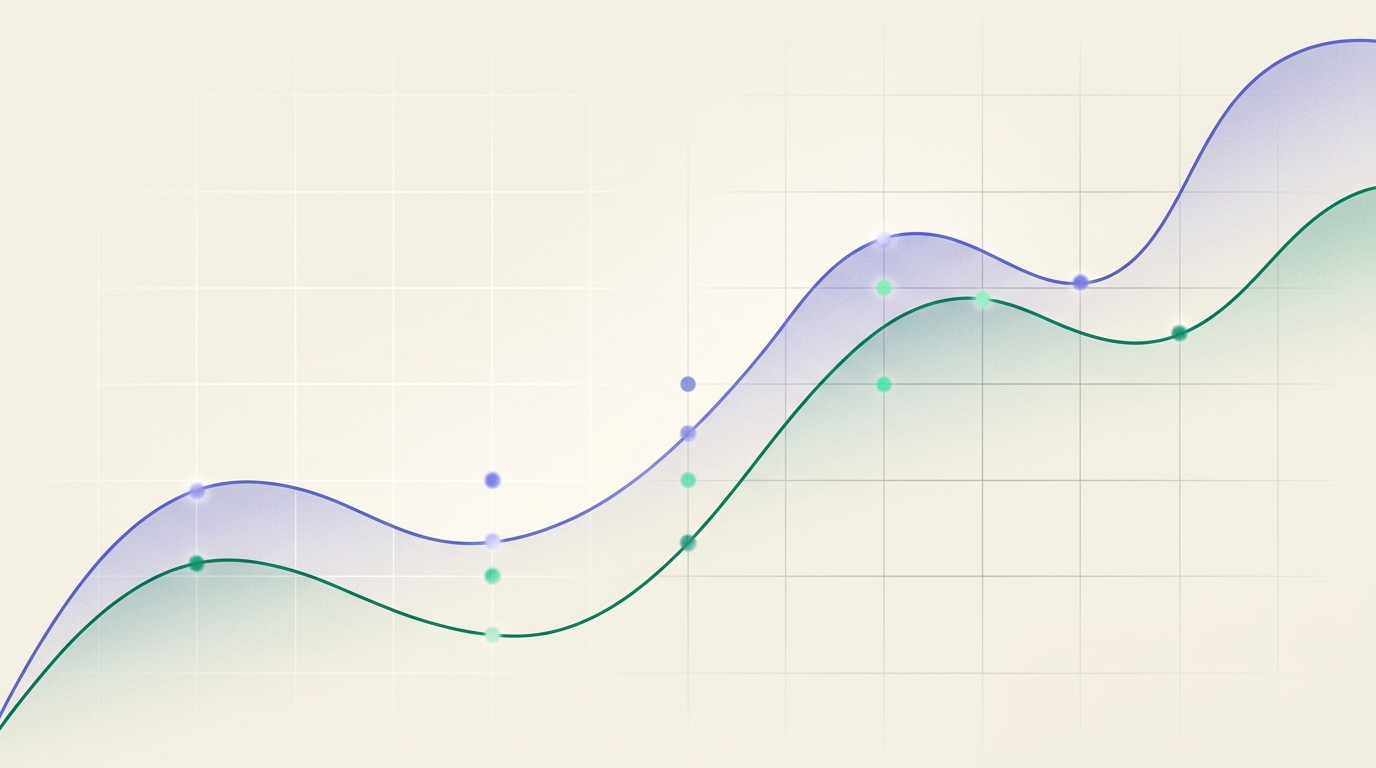
Most comprehensive longevity panels measure cortisol and DHEA-S in isolation. The more interesting signal often lives in the relationship between them, and it is a data point a deliberate optimizer should consider adding to a baseline.
Two hormones from the same axis, pulling in different directions
Cortisol and DHEA-S (dehydroepiandrosterone sulfate) both originate in the adrenal cortex, and both are downstream of the hypothalamic-pituitary-adrenal (HPA) axis. That shared origin is exactly why looking at them together can be informative.
Cortisol is the body's primary glucocorticoid. It follows a strong daily rhythm, peaking in the early morning and falling to its lowest point around midnight, and it rises in response to physical and psychological stressors [1]. It is catabolic in many tissues: helpful in short bursts, less friendly when chronically elevated.
DHEA-S is the sulfated, longer-lived form of DHEA, the most abundant circulating steroid in humans. Unlike cortisol, DHEA-S has a stable, slow-moving concentration and a well-documented, near-linear decline with age. Levels peak in the third decade of life and fall steadily thereafter, so that by the seventh or eighth decade they may sit at a fraction of their young-adult values [2][3].
Because both hormones share the same adrenal machinery but move on different timescales and in different directions under chronic load, the cortisol-to-DHEA-S ratio has been studied as a rough proxy for how the stress axis is behaving over time [4].
Source: [1] Physiology, Cortisol (StatPearls, NCBI Bookshelf)
Why the ratio, and not either number alone
A single cortisol value is noisy. It reflects the time of day, your commute, the blood draw itself, and whatever happened that morning. DHEA-S is far more stable but tells you mostly about age and adrenal reserve. Considered together, they can add context that neither provides alone.
The general research framing is straightforward: chronic HPA-axis activation tends to keep cortisol relatively high while DHEA-S drifts lower than its age-expected range, widening the ratio. Researchers have explored elevated cortisol-to-DHEA-S ratios in the context of aging, mood, cognition, and stress-related physiology [4][5]. It is important to be precise here: this is an area of active investigation, not a diagnostic test with a clean cutoff. No responsible reading treats the ratio as a verdict.
For an optimizer who already tracks HRV, sleep architecture, and recovery, the appeal is obvious. Those wearable signals hint at autonomic and stress load; the cortisol-DHEA-S relationship offers a biochemical counterpart that an independent provider can interpret against them, rather than in a vacuum.
Source: [1] Physiology, Cortisol (StatPearls, NCBI Bookshelf), [2] Age changes and sex differences in serum dehydroepiandrosterone sulfate concentrations throughout adulthood (J Clin Endocrinol Metab), [3] Dehydroepiandrosterone (DHEA) - Office of Dietary Supplements, NIH
What a rigorous provider looks at alongside it
The ratio is never read in isolation. An independent, physician-led provider group typically situates it inside a broader panel and a clinical history. Context that commonly matters includes:
- Timing and method of the cortisol draw. Because of the diurnal curve, a morning serum cortisol, a salivary rhythm, or a late-night sample answer different questions [1].
- Age-referenced DHEA-S. A DHEA-S that looks "low" is often exactly what the age-specific reference range predicts, which is why age-matched interpretation matters [2][3].
- Metabolic and thyroid markers. Fasting glucose, HbA1c, a lipid panel, and thyroid studies help distinguish a stress-axis pattern from other drivers.
- Sleep, training load, alcohol, and medications. Glucocorticoid medications, certain supplements, and even oral estrogens can shift these values, so history changes interpretation.
- Symptoms and goals. Subtle changes in energy, recovery, and sleep are the kind of thing an optimizer wants to get ahead of, and they belong in the conversation.
The point of a comprehensive baseline is not to react to one flagged value. It is to build a longitudinal picture so that a genuine trend can be told apart from a noisy day.
Reading the ratio responsibly
A few guardrails worth internalizing before you add this to a panel:
1. There is no universal "optimal" ratio. Assay methods, units, and reference populations differ. A number from one lab is not portable to another without care.
2. Correlation is not a protocol. Associations in the literature do not translate into a recommendation to take any specific hormone, supplement, or peptide. DHEA is available as a supplement, but that does not make it appropriate for any given person, and it can affect other hormones.
3. Interpretation is a clinical act. The same numbers can mean different things in a 34-year-old chasing recovery gains and a 45-year-old building a thirty-year plan. That is a decision for a licensed provider who has your full picture.
This article is educational and is not medical advice. Whether any test, supplement, or medication is appropriate for you is a decision only a licensed provider can make after reviewing your individual health information.
Where a longevity panel earns its keep
The value of adding cortisol and DHEA-S to a baseline is not the single reading. It is that you now have a reference point. Six or twelve months later, a repeat draw shows a direction, and direction is what long-horizon health is actually about. A stable, well-timed baseline lets an independent provider distinguish signal from noise, and it lets you make decisions from data rather than from a marketing narrative.
Where Velri fits
Velri is a technology and coordination company, not a medical practice. Velri does not provide medical care and employs no physicians. What Velri does is coordinate the logistics so a deliberate optimizer is not doing this alone: it helps arrange comprehensive lab work, connects you with independent, physician-led Provider Groups (such as Online Medical Care, P.C., and affiliated TMD provider groups) for a visit where a licensed provider reviews your results in context, and, if and only if a provider independently determines it is appropriate, coordinates fulfillment through independent, licensed pharmacies.
A prescription is never guaranteed; any treatment decision rests entirely with the independent provider. If a compounded medication is ever discussed, note that compounded medications are not reviewed or approved by the FDA for safety, effectiveness, or quality, that compounded products are not equivalent to or interchangeable with any FDA-approved brand-name drug, and that availability varies by state. Velri's services currently start in Nevada, with additional states rolling out over time.
For someone building a serious baseline, that is the useful part: rigorous labs, an independent provider who treats this as real medicine, and discretion around your data, coordinated in one place.