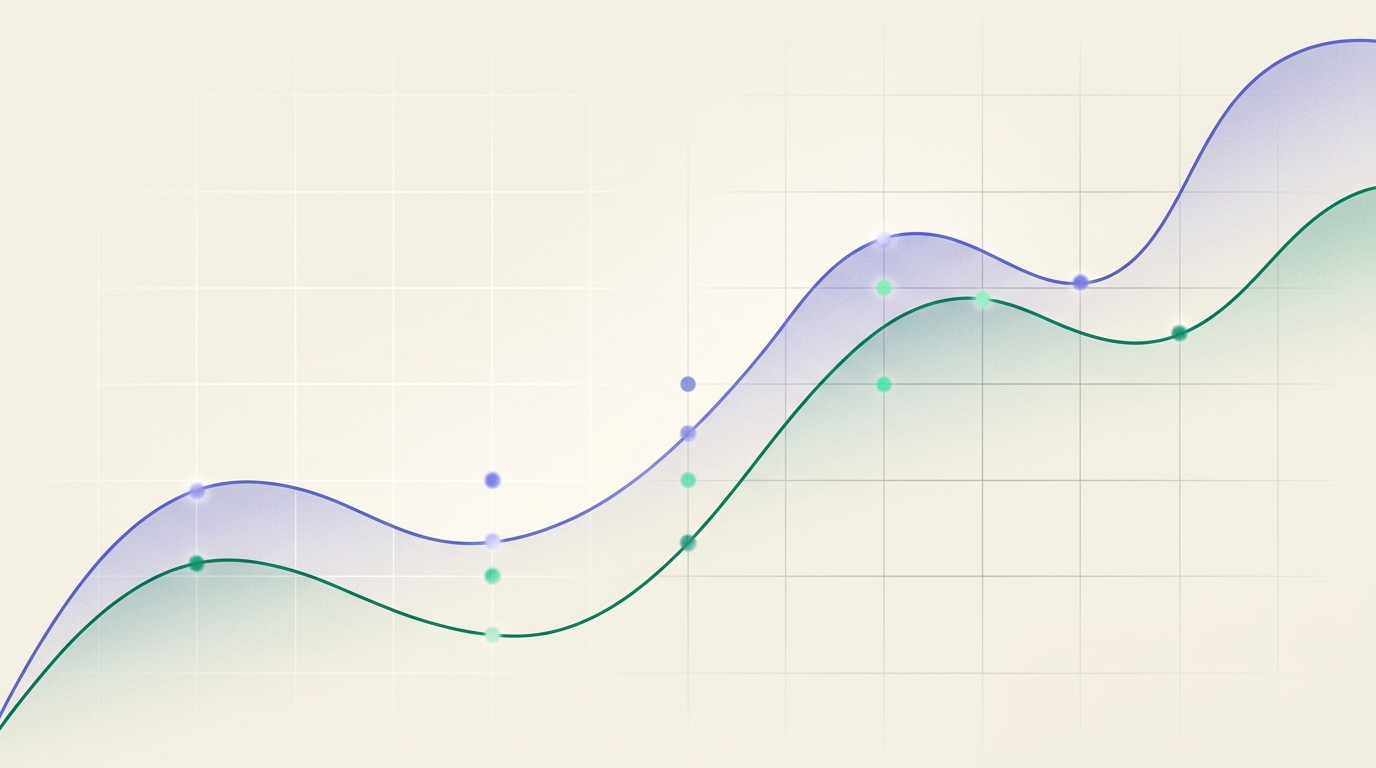
You already know the body runs on a clock. When you're the one awake at 3 a.m. running a code while the rest of the world sleeps, that clock doesn't stop — it just gets pointed the wrong way. So before your first baseline draw, it's worth understanding how draw timing can change what your numbers *look* like, and what a good provider actually adjusts for when reading them.
This is educational information, not medical advice, and it's written for a colleague, not a patient. The goal here is to help you walk into a baseline draw knowing enough to interpret it fairly — and to know why a printout by itself rarely tells the whole story.
Your labs aren't "off" — some of them are timed
Several common biomarkers follow a daily rhythm. In a person on a normal day schedule, that rhythm is predictable, and reference ranges are largely built around morning draws. When your sleep-wake cycle is inverted, some of those rhythms shift with you, some blunt, and some stay stubbornly tied to the external light-dark cycle. That mismatch — not a broken result — is often what makes a single time-stamped value look surprising.
The short version: the *number* can be real and the *interpretation* can still need context. Context is the whole game.
Cortisol: the most timing-sensitive of the bunch
Cortisol normally peaks in the morning shortly after waking and falls to its lowest point around the middle of the night [1]. That's why endocrine references treat cortisol as time-dependent and why draw time is documented alongside the result [1][2]. For someone waking in the early evening, a "morning-equivalent" peak may land at a clock time that looks unusual on a standard lab slip. Shift work has also been studied specifically for its effect on the cortisol rhythm, which is one reason a provider will ask *when you slept*, not just when blood was drawn [3].
Glucose: meal timing and the clock both matter
Glucose regulation itself has a circadian component — the same amount of food is handled differently at different internal times of day, and night-oriented eating is an active area of metabolic research [4]. A fasting glucose or an A1C is interpreted against standard diagnostic thresholds set by the American Diabetes Association [5], but a single glucose value pulled at the wrong point in your eating window can be misleading without the story around it. A1C, by contrast, reflects roughly the prior few months and isn't tied to the hour you walked in [5] — which is exactly why a thoughtful review looks at more than one marker.
Thyroid: a smaller daily swing, but still real
Thyroid-stimulating hormone (TSH) has its own daily pattern, typically higher overnight and lower in the afternoon, and this pattern can be altered in shift workers [6]. The swing is more modest than cortisol's, but if you're comparing two draws done at very different clock times, it's another reason not to over-read a single borderline value.
Source: [1] Physiology, Cortisol — StatPearls (NCBI Bookshelf)
What a provider actually adjusts for
Here's the part that matters for someone skeptical of hype: a good clinician doesn't just glance at whether a value sits inside or outside a printed range. Reading night-shift labs well usually means asking a few specific things.
- When did you last sleep, and for how long? This anchors where your internal clock actually is versus the clock on the wall.
- What time was the sample drawn relative to that sleep block? A cortisol drawn 30 minutes after your "morning" wake-up is a different conversation than one drawn at the end of your day.
- Fasting status and last meal. Especially for glucose and lipids.
- How long you've been on this schedule, and whether your days off flip you back. Rotating and inverted schedules don't affect the body the same way a stable one does [3].
- Symptoms and trend, not just one snapshot. Fatigue that a full sleep block doesn't fix is worth documenting carefully rather than dismissing.
None of that changes your actual physiology. It changes whether your results get *interpreted* fairly instead of pattern-matched to a range designed for a 7 a.m. day-shift draw.
% A1C · marker = Diabetes threshold
Source: [5] Standards of Care in Diabetes — Classification and Diagnosis (American Diabetes Association)
Why a raw home-kit printout can mislead
Direct-to-consumer lab kits can be genuinely useful for convenience, and for a schedule that never lines up with clinic hours, that convenience is real. But the FDA and others have flagged that lab tests used without clinical interpretation can be misunderstood, and that a result outside a reference range is not automatically a diagnosis — nor is a result inside one automatically reassurance [7]. A printout gives you a value and a range. It doesn't ask when you slept, it doesn't know you flip your schedule on Thursdays, and it can't weigh three markers against each other and against how you actually feel.
That gap — between *data* and *interpretation* — is the entire reason a coordinated review exists. You're not paying for the number. You're paying for someone whose job is to read the number in the context of your life.
Source: [1] Physiology, Cortisol — StatPearls (NCBI Bookshelf), [5] Standards of Care in Diabetes — Classification and Diagnosis (American Diabetes Association), [6] Thyroid-stimulating hormone circadian rhythm and shift work (PubMed)
A fair baseline, on a schedule that's the opposite of everyone else's
A baseline is most useful when it's honest about your reality. That means noting your true wake time, keeping draw conditions consistent so future comparisons mean something, and treating the first panel as a starting point rather than a verdict. If something looks worth a closer look, the right next step is a conversation with a licensed provider — not a self-diagnosis from a slip of paper, and not one more supplement bought on a hunch because a range looked scary.
If you've tried over-the-counter B-vitamins and noticed nothing, that's actually useful information too: it's a reason to get a real baseline before adding anything, so you're responding to your own data instead of a break-room rumor.
Where Velri fits
Velri is a technology and coordination company — it does not provide medical care. What Velri can do is make the logistics fit a life that runs on the night shift: help coordinate lab collection, document the details that matter (like your true wake time and draw timing), and connect you with an independent, licensed provider who reviews your results in context and remembers your situation between visits. Whether any evaluation, plan, or prescription is appropriate is always decided by that independent provider — it's never guaranteed, and this article isn't a recommendation to take anything.
If a provider ever discusses a compounded medication as part of a plan, know this: compounded medications are not reviewed or approved by the FDA for safety, effectiveness, or quality. Compounded products are not equivalent to or interchangeable with any FDA-approved brand-name drug. Availability varies by state.
The point of a coordinated baseline isn't to sell you a fix. It's to give you a fair, well-timed read on your own bloodwork — and a team that reads it like your schedule actually exists.
*This content is for education only and is not medical advice, diagnosis, or treatment. Talk with a licensed provider about your individual situation.*