You feel that the rules changed without a memo, but a single lab said "normal." Here's why one estradiol number at 43 rarely tells the whole story, and how an independent provider reads it in context.
First: your experience is real, and the timing is not "too young"
Perimenopause is the transition leading up to menopause, and it commonly begins in the mid-40s, though it can start earlier. It can last several years, with the final menstrual period (menopause) occurring at an average age of about 51 in the United States [1][2]. So being 43 or 44 with new, unfamiliar changes is squarely within the biology, not ahead of it. Broken sleep, mood shifts, an unpredictable cycle, and changes in energy or body composition are among the patterns clinicians associate with this stage [1][3].
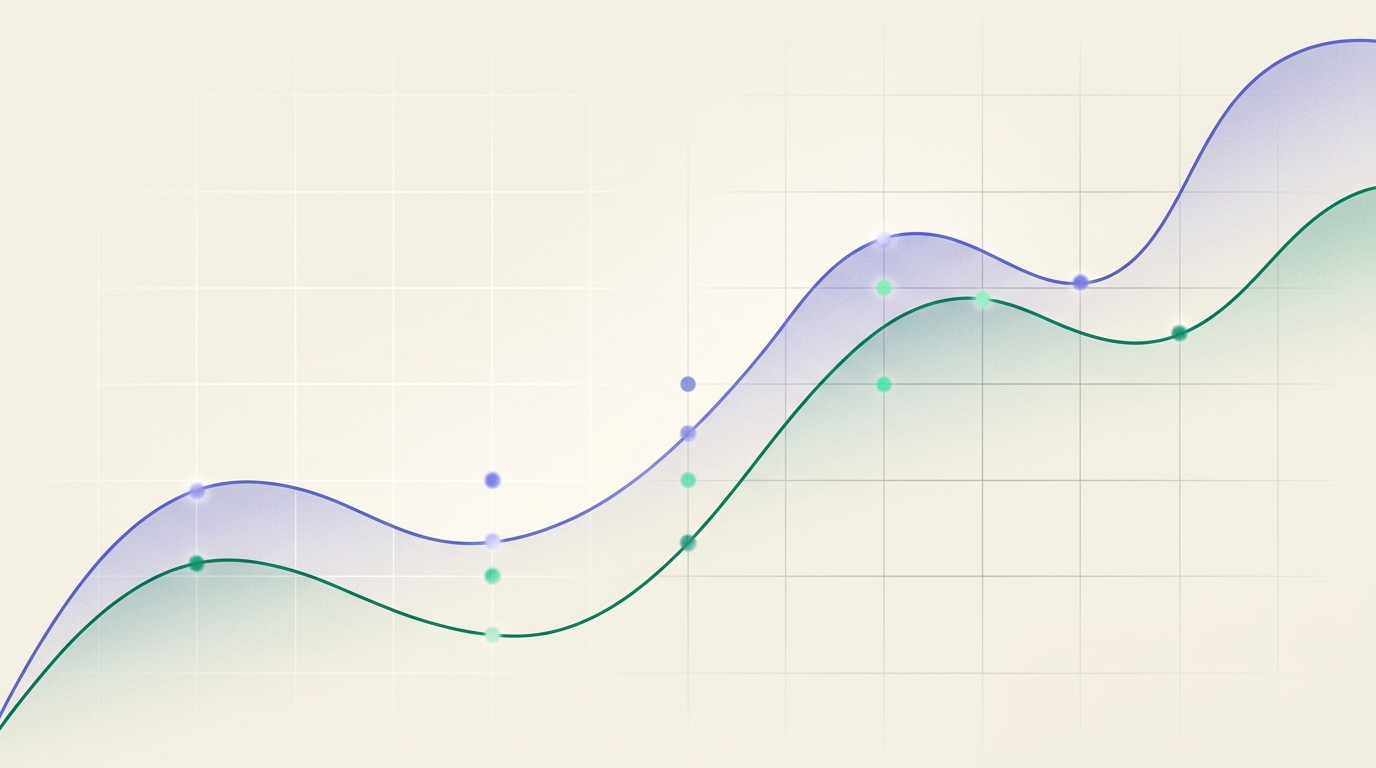
The frustrating part is that the transition is defined by *variability*, not by a single steady decline. During perimenopause, estrogen doesn't simply fall in a straight line; it can swing high and low, sometimes within the same month [2][3]. That is exactly what makes one snapshot lab so easy to misread.
Why a single estradiol reading can mislead
Estradiol is the main form of estrogen in the reproductive years. Its level changes dramatically across a normal menstrual cycle, rising toward ovulation and shifting again in the second half of the cycle [4]. Draw the blood on a different day and you can get a very different number, both of which may be "in range."
In perimenopause, that normal cyclic variation is layered on top of the transition's own irregularity. A value that looks reassuring on Tuesday may not reflect how your hormones behaved last week or will behave next week. This is why an isolated estradiol result, interpreted without the *timing of the draw*, the *phase of your cycle*, and your *symptom pattern*, can flatten a dynamic story into one misleading dot.
A provider reading your report thinks less like "is this number normal?" and more like "what is this number, on this cycle day, in the context of everything else?"
Source: [1] Menopause — Overview (MedlinePlus, NIH), [2] The 2022 Hormone Therapy Position Statement of The North American Menopause Society
What a provider actually reviews across a cycle
Rather than one estradiol value, an independent provider typically looks at a *pattern* and a *panel*. Common companion markers include:
- FSH (follicle-stimulating hormone). As ovarian response changes, FSH tends to rise, but in perimenopause it, too, fluctuates and can look elevated one cycle and normal the next. Because of this, no single FSH value confirms or rules out the transition [2][3]. Guidelines generally advise diagnosing perimenopause clinically, from symptoms and menstrual changes, rather than from one hormone test in women over 45 [3].
- Estradiol, read with cycle timing. Interpreted alongside the day of the cycle and how symptoms track, not in isolation [4].
- LH (luteinizing hormone). Reviewed alongside FSH and estradiol for a fuller endocrine picture.
- Thyroid markers (TSH, sometimes free T4). Thyroid disease is common in midlife women and can mimic perimenopausal symptoms such as fatigue, weight change, and mood shifts, so it's often checked to avoid attributing everything to hormones [5].
- Ferritin/iron and a complete blood count. Heavy or irregular bleeding, common in this stage, can affect iron stores and energy.
- Metabolic context (A1c, lipids). Midlife is when cardiometabolic risk often shifts, so a baseline here supports tracking over time.
The point isn't to run every test imaginable; it's to build a *baseline* that explains how you actually feel and that you can re-check as your body keeps changing.
What the numbers on your report mean, roughly
Reference ranges vary by lab and by the assay used, so always read your result against your own report's stated range. Broadly, estradiol in premenopausal women fluctuates widely across the cycle and is typically much lower after menopause; FSH tends to be higher after menopause than in the reproductive years [4]. The perimenopausal window is precisely the messy middle between those states, which is why one draw is a chapter, not the book.
cycle phase · marker = single draw
Source: [4] Estradiol blood test (MedlinePlus Medical Encyclopedia, NIH)
The clinical, not just chemical, read
Because hormone labs fluctuate, major guidance leans on the *clinical picture*: your menstrual pattern, symptoms, timeline, and history, supported by labs where they add information [3]. That's a very different experience from a single test and a quick "you're normal." A thorough review takes your symptoms as data too, alongside the numbers.
It also helps rule things in and out. If fatigue and mood changes trace partly to thyroid function or low iron, that's worth knowing before assuming hormones are the whole answer [5]. A good baseline is as much about *what else could explain this* as it is about estrogen.
If hormone therapy comes up
Whether any treatment, including menopausal hormone therapy, is appropriate is an individual medical decision made by a licensed provider based on your history, symptoms, and risks; it is never guaranteed and is not one-size-fits-all [2]. Professional societies describe hormone therapy as an option for certain symptoms in appropriately selected people, with benefits and risks that depend on age, time since menopause, and personal health history [2][6]. The right move is a real conversation, not a pill pitched before anyone has listened.
If a plan ever involves a compounded medication: Compounded medications are not reviewed or approved by the FDA for safety, effectiveness, or quality. Compounded products are not equivalent to or interchangeable with any FDA-approved brand-name drug. Availability varies by state.
How to make your labs more useful
A few practical notes that help any provider read your report:
- Note the date of your last period and where you likely are in your cycle when blood is drawn.
- Track symptoms over a few weeks (sleep, mood, cycle changes, energy) so patterns, not just single days, are visible.
- Bring prior results if you have them; two points across time say more than one.
- Expect that repeat testing may be suggested, because fluctuation is the norm here.
This article is educational and is not medical advice; it can't diagnose you or tell you what to take. Only an independent licensed provider can interpret your labs and decide whether any treatment is appropriate for you.
Where Velri fits
Velri is a technology and coordination company, not a medical practice. What that means in practice: Velri can help coordinate a comprehensive lab panel, connect you with an independent, licensed provider who reviews your results and history and takes your midlife changes seriously, and, *if and only if* that provider decides a prescription is appropriate for you, coordinate fulfillment through an independent, licensed pharmacy. Care is delivered by independent provider groups; medications are dispensed by independent pharmacies. Nothing here is a promise of a diagnosis or a prescription, only a way to get the fuller baseline you've been asking for, with a team that maps the picture before recommending anything.